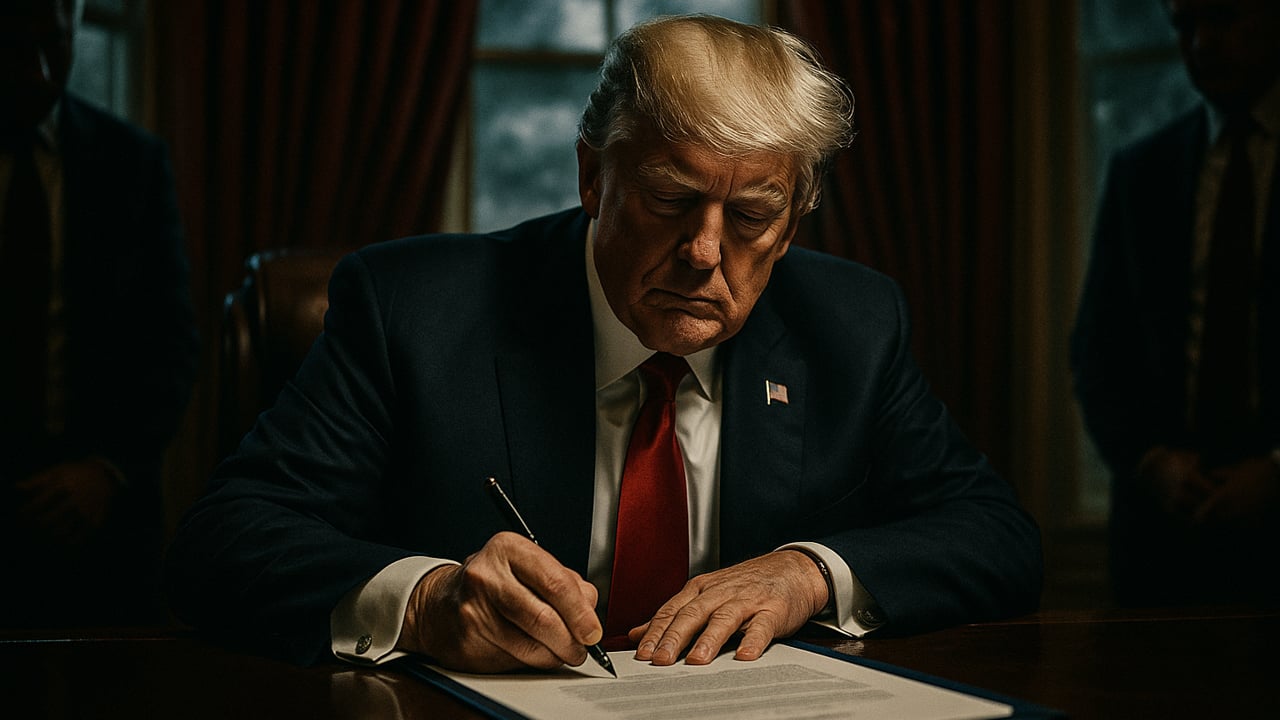
Trump Orders: Law Firms on the Line
An interview with Prof. John Morley
Presidential directives issued in early 2025 single out and impose severe restrictions on specific law firms—restrictions such as barring lawyers from federal buildings, revoking security clearances, and even rejecting or canceling government contracts for firm clients. These measures can pose a real threat to the business models of the firms targeted. In the accompanying Talks On Law video, Professor John Morley of Yale Law School unpacks how these sanctions can jeopardize even the most profitable partnerships.
The orders’ most potent lever is client pressure. Morley observes that when agencies threaten to withhold contracts, licenses, or other approvals from a targeted firm’s clients, companies must choose between trusted counsel and their core business interests. Few boards will jeopardize a lucrative government bid or an FDA clearance, even if they would otherwise prefer to stay with their lawyers. As a result, affected clients will feel significant pressure to move their work to counsel unshadowed by federal disfavor.
Client flight is costly in itself, but the real fear is that it may trigger something more dangerous—a self‑reinforcing partner exodus. Morley explains that profits per partner fall when large matters walk out the door. As a result, the rainmakers who can most easily move take their books of business elsewhere; each departure intensifies the pay cut for those who remain. The result in such cases, Morley explains, is a spiraling cycle of partner withdrawal that resembles a run on a bank without the benefit of deposit protection.
Bankruptcy and partnership rules add urgency. Capital repaid to a departing partner within the bankruptcy preference window can be clawed back, and “fraudulent‑transfer” doctrine may reach profit distributions made while the firm is insolvent. Partners who stay on can also face unfinished‑business liability, owing to creditors a share of ongoing fees earned on matters that were open at collapse. These doctrines paradoxically reward partners for leaving early and punish those who stay, speeding the unraveling of a firm once trouble appears.
Faced with these pressures, litigation‑focused firms such as Perkins Coie have fought the directives in court, while large transactional shops—including Skadden and Paul Weiss—negotiated largely symbolic settlements that involve pro bono work the firms were already comfortable with. Yet even with courtroom victories and low-cost settlements, Morley sees a “lose-lose” dynamic. Settling firms risk reputational damage for appearing compliant, while firms that fight may win prestige but still operate under a shadow of government displeasure that can unsettle risk-averse clients. Morley suggests this could push full-service giants to weigh political exposure more carefully and further split the market between firms willing to compromise for transactional access and those ready to litigate any matter—even at the risk of provoking official ire.
Additional Resources
-
President Donald J. Trump Addresses Risks from Perkins Coie LLP — (Mar. 2025)
-
President Donald J. Trump Addresses Risks from WilmerHale — (Mar. 27 2025)
-
President Donald J. Trump Addresses Risks from Susman Godfrey LLP — (Apr. 9 2025)
-
Why Law Firms Collapse — by John Morley, The Business Lawyer (2020)
Listen on Podcast
About Prof. John Morley
“Law firms don’t just collapse—they blow up. They go up in a ball of fire.”
Professor John Morley of Yale Law School is an expert in organizational law and investment management. He teaches courses on business organizations and securities regulations. He was an Associate Professor of Law at the University of Virginia School of Law and the director of the school’s Law & Business Program. Prior to that, he served as an Associate Research Scholar and John R. Raben/Sullivan & Cromwell Executive Director of the Yale Law School Center for the Study of Corporate Law. Following law school, he practiced law as an associate at Covington & Burling LLP in the Corporate and Securities Group. Professor Morley has authored numerous publications on mutual funds, investment funds, and financial regulations.