The Criminal's Brain - Neuroscience in the Courtroom
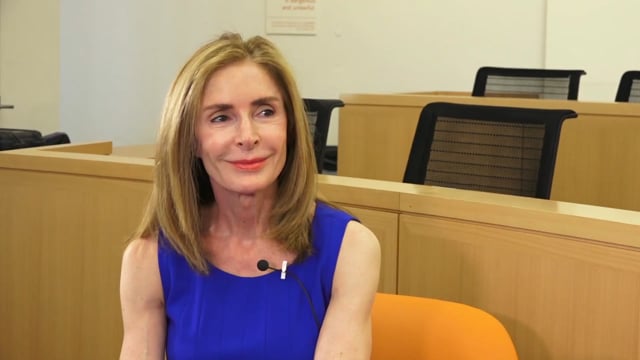
An interview with Prof. Deborah Denno
In criminal justice, the mental state of the defendant can be critical, requiring courts to look at defendants thoughts as well as their actions. Outside of the courtroom, new research has shifted our understanding of how the human brain works. How are are breakthroughs in neuroscience and new technologies such as brain scans being used in today's courts to judge guilt and calculate punishment? Professor Denno explores important criminal justice issues from the lens of modern neuroscience and explains the extent that evolving scientific insight is affecting the criminal justice system.
About Prof. Deborah Denno
“In some cases, neuroscience is making the battle of [court] experts very different than it used to be.”
Professor Deborah Denno is the Arthur A. McGivney Professor of Law at Fordham University School of Law, where she teaches criminal law, criminal procedure, torts, and various seminars. She is also the Founding Director of the Neuroscience and Law Center at Fordham University School of Law. Prior to joining the Fordham Law faculty in 1991, she clerked for Anthony J. Scirica, now Chief Judge of the Third Circuit Court of Appeals. Professor Denno’s Neuroscience and Law Center provides evidence-based information to academics, lawyers, and the public about legally relevant advances in neuroscience with the goal of fostering legal scholarship and the use of neuroscience in legal circles. Professor Denno has published on a broad range of topics relating to criminal law, criminal procedure, social sciences and the law, and the death penalty. She also initiated cutting-edge examinations of criminal law defenses pertaining to insanity, rape law, gender differences, biological and genetic links to crime, drug offenses, among others.