Shadow Immigration and the Power of the Presidency
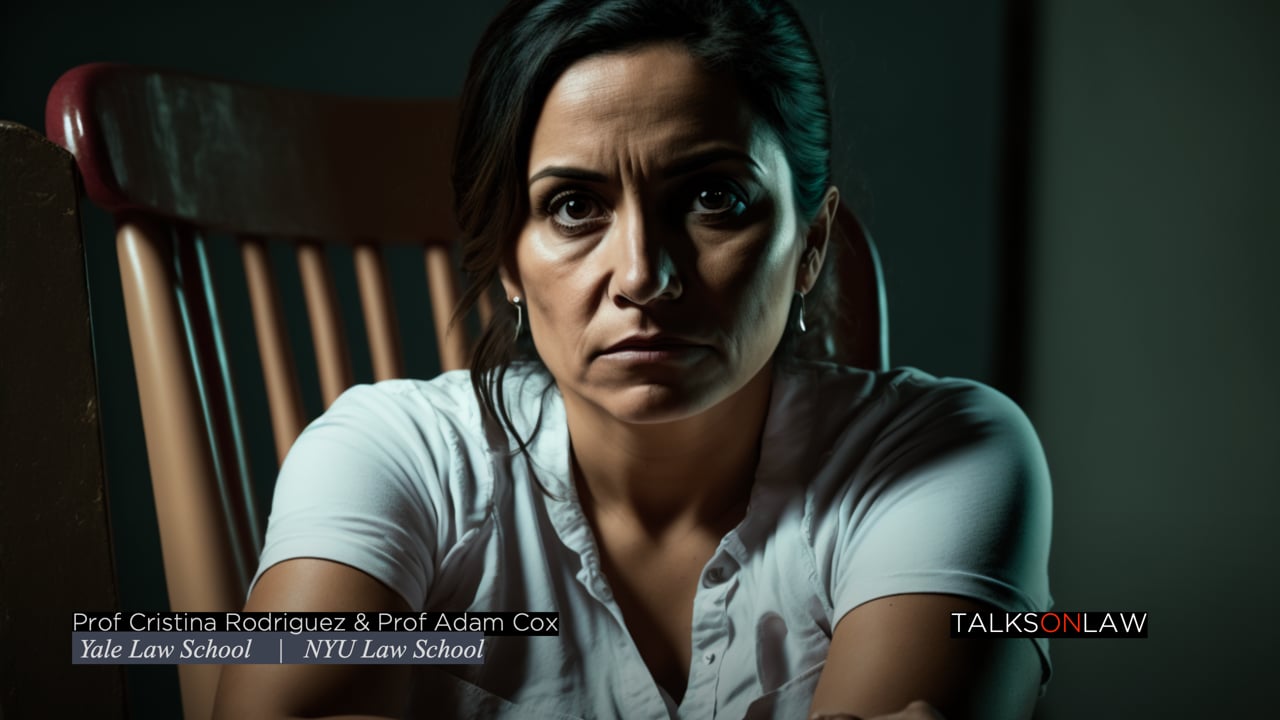
An interview with Profs Adam Cox and Cristina Rodriguez
The president wields immense power to shift immigration policy and shape the lives of nearly 11 million undocumented immigrants who live in the shadow of the U.S. immigration system. Regulatory and demographic changes over the last century have resulted in a large undocumented population in America, particularly from Mexico and Central America. Without a path to legalization, undocumented immigrants remain deportable at any time and subject to the discretion of the enormous immigration enforcement bureaucracy. In part 1 of this 2-part series, Professors Adam Cox and Cristina Rodriguez, co-authors of The President and Immigration Law, explain the changes that have led to this massive shadow immigration system. They explore how the president came to sit atop a supersized enforcement bureaucracy and trace how deportation enforcement priorities have increasingly dominated U.S. immigration policy under recent administrations.
Watch Part 2 of Shadow Immigration and the Power of the Presidency.
About Profs Adam Cox and Cristina Rodriguez
“The only way to really change… the powers that the president wields over American imigration policy today is to shrink [the] shadow system.”
Adam Cox
Adam Cox, Robert A. Kindler Professor of Law at New York University School of Law, is a leading expert on immigration law, voting rights, and constitutional law. His writing has appeared in the Yale Law Journal, Stanford Law Journal, Journal of Law and Economics, and many other scholarly publications, and has been covered by the New York Times, the Los Angeles Times, and others.
Cristina Rodriguez
Cristina M. Rodríguez is Leighton Homer Surbeck Professor of Law at Yale Law School and a nationally recognized scholar of administrative, constitutional, and immigration law. Her work has been published in numerous academic journals, including the Yale Law Journal, the Columbia Law Review, and Daedelus. She also has appeared regularly in media outlets, including National Public Radio, the Washington Post, the New York Times, Democracy Journal, and Forbes. Beyond academia, she served as Deputy Assistant Attorney General for the Office of Legal Counsel in the Department of Justice during the Obama Administration and clerked for U.S. Supreme Court Justice Sandra Day O’Connor.